
Stainless Steel Laboratory Furniture Manufacturer in Bangalore
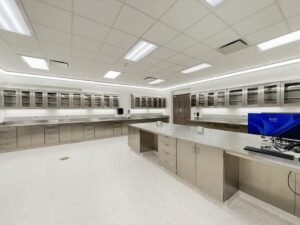
Stainless Steel Laboratory Furniture Manufacturer in Bangalore is an important search term for businesses, research institutions, educational organisations, healthcare facilities and industrial laboratories looking for durable, hygienic and professionally designed laboratory furniture. Selecting the right manufacturer helps ensure that laboratory workstations, storage cabinets, sinks, equipment tables and supporting structures meet the operational requirements of the facility.
Karvi Interio, a metal interiors and fabrication brand operating under Sowmya Enterprises, provides a manufacturing-oriented approach to metal furniture and interior solutions. For laboratory projects, stainless steel furniture can be considered for applications that require durability, easy cleaning, corrosion resistance and a well-organised working environment. The appropriate material grade, thickness, finish, fabrication method and installation arrangement should be selected according to the intended laboratory application.
Whether you are planning a pharmaceutical laboratory, educational science laboratory, research facility, industrial testing laboratory or quality-control department, this guide explains how to evaluate stainless steel laboratory furniture, compare materials, plan layouts and select a suitable manufacturing partner in Bangalore.
What Is Stainless Steel Laboratory Furniture?
Stainless steel laboratory furniture consists of workstations, tables, cabinets, storage units, sink units, equipment stands and related furniture manufactured using stainless steel. It is designed to support laboratory activities in environments where cleanliness, durability and resistance to corrosion are important.
Unlike ordinary office furniture, laboratory furniture must be planned around the work being performed. A chemistry laboratory, pharmaceutical testing facility, school laboratory and electronics testing centre may have very different requirements for work surfaces, storage, utilities and equipment support.
A properly planned laboratory furniture system can improve workflow, make cleaning easier, provide organised storage and help laboratories use their available floor space efficiently.
Common products include:
- Stainless steel laboratory workbenches
- SS304 laboratory tables
- Stainless steel laboratory storage cabinets
- Laboratory sink cabinets and wash stations
- Mobile laboratory trolleys
- Instrument tables and equipment stands
- Stainless steel drawers and shelving
- Wall-mounted laboratory storage units
- Custom-fabricated laboratory furniture
- Special-purpose metal workstations
The furniture should be specified according to the chemicals, temperatures, cleaning agents, equipment loads and environmental conditions expected in the laboratory.
What makes laboratory furniture different from ordinary furniture?
Laboratory furniture is designed around technical and operational needs. Its selection may involve material compatibility, load-bearing capacity, cleanability, resistance to chemical exposure, safe edges, utility access and the dimensions of laboratory equipment.
For example, a balance table used for precision weighing may require vibration control that a standard stainless steel table does not provide. Similarly, a laboratory handling aggressive chemicals may require a different material or worktop than one used for general educational experiments.
Choosing the furniture according to its actual application is therefore more important than selecting it on appearance alone.
Stainless Steel Laboratory Furniture Manufacturer in Bangalore
Why Choose a Stainless Steel Laboratory Furniture Manufacturer in Bangalore?
Bangalore is a major centre for technology, biotechnology, pharmaceutical research, engineering, healthcare, education and industrial development. These sectors create demand for laboratory infrastructure that supports testing, research, training, product development and quality assurance.
Working with a suitable stainless steel laboratory furniture manufacturer in Bangalore can make project coordination easier for organisations establishing or upgrading laboratories in Bengaluru and surrounding industrial areas.
Local project coordination
A Bangalore-based manufacturing partner may be able to coordinate site measurements, design discussions, fabrication schedules, delivery and installation more conveniently for local projects.
Custom dimensions and layouts
Laboratories rarely follow one standard layout. Workstations must fit around walls, columns, doors, equipment, sinks, utility connections and circulation paths. Custom fabrication helps accommodate these conditions.
Material and finish selection
The manufacturer should explain the proposed stainless steel grade, sheet thickness, surface finish, joints, supports and hardware. These specifications should be documented before production begins.
Coordination with laboratory consultants
Laboratory furniture often needs to be coordinated with architects, MEP consultants, laboratory planners, equipment suppliers and contractors. Accurate drawings and clearly defined interfaces can reduce site modifications.
Easier after-sales coordination
Local access can simplify discussions about adjustments, replacement components and maintenance requirements, subject to the manufacturer’s service arrangements and project terms.
When evaluating manufacturers, do not rely solely on their location. Review their fabrication capabilities, technical understanding, quality-control process, installation experience and ability to document specifications.
Benefits of Stainless Steel Laboratory Furniture
Stainless steel is widely used in technical and industrial environments because of its useful combination of strength, corrosion resistance and cleanability. However, its performance depends on the grade, fabrication quality, surface finish and conditions of use.
Corrosion resistance
Stainless steel contains chromium, which forms a protective passive layer on the surface. This layer helps the material resist corrosion under suitable conditions.
SS304 is commonly considered for general laboratory furniture. SS316 may be more appropriate where exposure to chlorides or certain corrosive chemicals creates greater corrosion risk.
Neither grade is universally resistant to every chemical. The actual chemical concentration, temperature, contact duration and cleaning procedure should be evaluated before specifying the material.
Easy cleaning
Smooth stainless steel surfaces are generally straightforward to wipe and clean. Properly designed furniture with accessible joints, suitable finishes and minimal dirt-trapping gaps can support routine laboratory housekeeping.
For applications with strict hygiene requirements, the furniture design must also address seams, crevices, drainage, cleanability and compatibility with the laboratory’s sanitation procedures.
Durability
Stainless steel furniture can provide long service life when it is correctly designed, fabricated, installed and maintained. Suitable supports, reinforced worktops and properly selected hardware are important when the furniture must carry laboratory equipment.
The expected service life depends on the operating environment and the quality of construction. Stainless steel should not be assumed to be maintenance-free.
Professional appearance
Stainless steel offers a consistent industrial appearance suitable for laboratories, research facilities, testing departments and modern technical workspaces.
Different finishes may be selected depending on cleaning requirements, visibility of surface marks, project aesthetics and budget.
Design flexibility
Custom fabrication can accommodate special dimensions, equipment clearances, drawers, shelves, adjustable feet, sink openings and other project-specific requirements.
The design should be finalised around the intended workflow rather than adding features that do not serve a defined purpose.
Long-term value
Although stainless steel furniture may have a higher initial cost than some alternatives, the total cost of ownership may be favourable where durability, cleaning requirements and resistance to environmental exposure are important.
A fair comparison should consider the purchase price, installation, maintenance, replacement frequency, downtime and suitability for the laboratory’s actual work.
Types of Stainless Steel Laboratory Furniture
A laboratory furniture manufacturer may produce standard furniture modules or custom-built systems. The exact range should be confirmed with the manufacturer before a project is specified.
Stainless steel laboratory workbenches
Laboratory workbenches provide working surfaces for routine testing, sample handling, preparation and other laboratory activities.
Typical design considerations include:
- Required length, depth and working height
- Equipment weight and load distribution
- Worktop thickness and reinforcement
- Under-bench storage
- Cable and utility access
- Surface finish and cleaning method
- Adjustable feet or other levelling arrangements
The load rating should be specified for the complete assembly, not assumed from the sheet thickness alone.
SS304 laboratory tables
SS304 tables are commonly considered for general-purpose laboratory work where stainless steel is suitable for the environment.
They may be configured with fixed or adjustable legs, lower shelves, drawers, equipment supports or custom dimensions.
The manufacturer should clarify whether the top is a solid sheet, reinforced construction or another specified assembly.
Stainless steel laboratory storage cabinets
Storage cabinets help organise laboratory tools, consumables, accessories and selected materials.
Common configurations include:
- Swing-door cabinets
- Drawer cabinets
- Under-bench cabinets
- Wall-mounted cabinets
- Tall storage cabinets
- Adjustable-shelf cabinets
- Special-purpose equipment storage units
Cabinet selection should reflect the contents being stored. Chemicals, flammable materials, compressed gases and other hazardous substances may require purpose-built storage systems rather than ordinary stainless steel cabinets.
Laboratory sink cabinets
Sink cabinets support washing, rinsing and other suitable wet-laboratory activities.
Design factors include sink size, tap and utility connections, splash exposure, drainage access, cleaning requirements and compatibility with the chemicals handled.
The sink, worktop, joints and plumbing components must be selected as a coordinated system. Stainless steel construction alone does not guarantee chemical compatibility.
Stainless steel instrument tables
Instrument tables support laboratory instruments and measuring equipment. Their design must account for the equipment’s dimensions, mass, operating conditions and service requirements.
Precision balances, microscopes and sensitive analytical instruments may need specialised vibration isolation or stable support systems. A standard stainless steel table should not be specified for such equipment without checking the instrument manufacturer’s requirements.
Mobile laboratory trolleys
Mobile trolleys help move approved equipment, containers and supplies within a laboratory.
Important features include suitable castors, locking mechanisms, load capacity, handle design, shelf retention and cleanability.
The trolley should be sized for the intended load and the width of laboratory access routes.
Stainless steel shelving and racks
Shelving systems provide organised storage for laboratory supplies and suitable equipment. Shelf loading, anchoring, stability, clearance and cleaning access should be defined during design.
Storage systems must not obstruct emergency exits, fire equipment or access to essential laboratory services.
Laboratory Furniture for Different Industries
A stainless steel laboratory furniture manufacturer in Bangalore may serve several industries, but furniture specifications should be matched to each application’s operational and regulatory requirements.
Pharmaceutical laboratories
Pharmaceutical facilities may include quality-control laboratories, research areas, sample preparation rooms and supporting testing spaces.
Furniture selection may consider cleanability, material traceability, surface finish, documentation and compatibility with cleaning agents.
Where a facility operates under specific GMP or other regulatory requirements, the design must be reviewed against the applicable requirements. Stainless steel furniture by itself does not establish regulatory compliance.
Biotechnology and life science laboratories
Biotechnology facilities may need workstations, storage cabinets, instrument supports and wash areas designed around specific workflows.
The furniture must be selected according to biological hazards, cleaning protocols, containment needs and the requirements of the equipment installed.
Biosafety cabinets, fume cupboards and other specialised containment equipment require appropriate certified equipment and installation arrangements. Ordinary furniture is not a substitute.
Educational science laboratories
Schools, colleges, universities and technical institutions may need laboratory tables, storage cabinets, sink units and mobile equipment trolleys.
Design priorities often include durable construction, safe corners, stable supports, easy cleaning and appropriate dimensions for students and instructors.
The furniture should be coordinated with the institution’s curriculum, equipment list, occupancy and safety requirements.
Chemical testing laboratories
Chemical laboratories need careful material selection because acids, alkalis, solvents and salts can interact differently with stainless steel.
SS304 may be suitable for certain general applications, while SS316 or non-metallic materials may be more suitable for others. Some chemical environments require specialised linings, worktops or equipment.
A compatibility review should be completed before finalising the furniture material.
Industrial quality-control laboratories
Manufacturing companies use laboratories for incoming-material inspection, dimensional checks, product testing and process quality control.
Furniture may include heavy-duty workbenches, instrument tables, storage cabinets and dedicated areas for test equipment.
The structure should be designed for the expected loads and working conditions, with appropriate provision for power, data and other services.
Food and beverage testing laboratories
Food testing facilities may need easy-to-clean work surfaces, wash stations, storage and dedicated sample-handling areas.
The material, finish and furniture configuration should align with the facility’s cleaning procedures and contamination-control plan.
Electronics and engineering laboratories
Electronics laboratories may require instrument benches, tool cabinets, component storage and cable-management provisions.
Where electrostatic discharge control is necessary, a conventional stainless steel worktop is not automatically an ESD-safe workstation. Appropriate grounding, dissipative surfaces and other specified ESD controls may be required.
SS304 vs SS316 Stainless Steel Laboratory Furniture
Selecting the correct stainless steel grade is one of the most important decisions in laboratory furniture procurement.
SS304 and SS316 are both austenitic stainless steel grades, but they differ in composition and corrosion resistance.
| Parameter | SS304 | SS316 |
|---|---|---|
| Main alloy distinction | Chromium-nickel stainless steel | Chromium-nickel stainless steel with molybdenum |
| General corrosion resistance | Good in many ordinary environments | Generally improved resistance to chloride-related corrosion |
| Chloride exposure | Requires careful evaluation | Often a better candidate, but still not universally resistant |
| Typical use | General laboratory furniture where compatible | More demanding environments where its improved resistance is justified |
| Relative material cost | Usually lower | Usually higher |
| Chemical compatibility | Must be checked for the specific application | Must also be checked for the specific application |
| Suitability for all laboratories | No | No |
When should you choose SS304?
SS304 can be considered for general-purpose laboratory furniture when the chemical exposure, cleaning agents and environmental conditions are compatible with the grade.
It is often a practical starting point for workbenches, cabinets and storage furniture used in ordinary laboratory environments.
When should you consider SS316?
SS316 may be more suitable where chloride exposure or other corrosive conditions create additional risk. However, it is not immune to all chemical attack, pitting or crevice corrosion.
The selection should be based on documented chemical compatibility and operating conditions rather than the assumption that a higher grade is always necessary.
Why is material verification important?
A quotation should identify the specified grade and the documentation available to verify it. Depending on the project, buyers may request material test certificates, traceability records or other quality documents.
A material designation should not be accepted solely because it appears in a product description.
Stainless Steel vs Mild Steel vs Wooden Laboratory Furniture
Different laboratory environments require different furniture materials. The best choice depends on chemical exposure, hygiene requirements, loads, cost and intended service life.
| Parameter | Stainless steel | Powder-coated mild steel | Wood-based furniture |
|---|---|---|---|
| Corrosion resistance | Depends on grade and environment; good when correctly specified | Depends on coating integrity and exposure | Depends on board, laminate, edges and moisture exposure |
| Surface cleaning | Generally straightforward | Generally straightforward when coating is intact | Depends on surface finish and joints |
| Chemical compatibility | Grade and chemical specific | Coating and chemical specific | Surface material and chemical specific |
| Moisture exposure | Often suitable with correct design | Damaged coatings may permit corrosion | Swelling or damage may occur depending on construction |
| Structural design | Requires suitable sections and reinforcement | Requires suitable sections and coating | Depends on board, framing and hardware |
| Initial cost | Often higher | Often lower than stainless steel | Varies widely |
| Typical application | Suitable wet, cleanable or corrosive-risk areas after assessment | General dry laboratory areas where appropriate | Selected dry areas and applications where compatible |
| Maintenance | Cleaning and inspection required | Coating inspection and repairs may be needed | Edges, joints and surfaces require care |
No single material is best for every laboratory. A mixed-material approach can be appropriate: stainless steel in selected wet or hygiene-sensitive areas, powder-coated steel in suitable dry areas, and other specialised materials where the process demands them.
The final selection should be based on laboratory-specific risk assessment and design requirements.
How to Select the Right Laboratory Furniture Manufacturer
Selecting a manufacturer requires more than comparing quotations. A technically appropriate furniture system should match the facility’s work processes and installation conditions.
Review manufacturing capability
Ask whether the manufacturer can perform the required sheet-metal cutting, bending, welding, assembly, finishing and quality inspection.
Confirm which activities are completed in-house and which are outsourced if this affects quality, lead time or accountability.
Ask for material specifications
The quotation should identify the stainless steel grade, specified thickness, surface finish and important hardware details.
Where needed, request material documentation and define acceptance criteria before fabrication.
Check design and drawing capability
A competent project partner should be able to work from site measurements and provide drawings or dimensioned layouts suitable for approval.
Review clearances, access, equipment dimensions, sink positions, service connections and storage arrangements before releasing the job for production.
Evaluate fabrication quality
Inspect or request evidence of workmanship, including weld quality, surface consistency, sharp edges, door alignment, drawer movement, structural stability and finishing.
Quality should be judged against agreed project specifications rather than appearance alone.
Confirm load and installation requirements
Ask for applicable load ratings and information about reinforcement, anchoring, levelling and installation.
Heavy equipment and specialised instruments may require dedicated support structures or additional design measures.
Understand project delivery and warranty terms
Confirm the scope of supply, delivery timeline, installation responsibility, exclusions, warranty coverage and after-sales arrangements in writing.
A clearly defined scope reduces misunderstandings between the furniture supplier, consultant, contractor and laboratory owner.
Compare total project value
Compare quotations on an equivalent basis. A lower price may reflect differences in material grade, thickness, worktop construction, hardware, finish, installation or documentation.
The best-value proposal is one that meets the technical requirements while providing transparent commercial terms.
Important Technical Specifications for Laboratory Furniture
Before requesting a quotation from a stainless steel laboratory furniture manufacturer in Bangalore, prepare a technical schedule.
Material grade
Specify SS304, SS316 or another approved material according to the environment. State whether the grade applies to the entire assembly or only selected components.
Sheet thickness
Specify the required thickness separately for worktops, cabinet panels, shelves, legs and other components where relevant.
Do not assume that all components use the same thickness. The required thickness depends on dimensions, loads, support spacing and structural design.
Surface finish
Identify the required finish and any limits on visible defects, roughness or surface condition.
The finish should support the intended cleaning method and application. Decorative appearance should not take priority over functional suitability.
Dimensions
Provide the overall length, depth and height of each furniture item. Include clearances for doors, drawers, service connections and equipment.
Load capacity
Identify expected static and operational loads, including concentrated loads from instruments. Request a suitable design for the actual load distribution.
Welding and joints
Specify workmanship expectations, accessible surfaces and cleaning requirements. In applications requiring enhanced hygiene, joint design and crevice control should receive particular attention.
Hardware and moving components
Identify the required hinges, drawer slides, handles, locks, castors and adjustment mechanisms. Hardware must be compatible with the environment and expected use.
Utility coordination
Show the locations of electrical outlets, data points, water supplies, drainage, gas services and other required utilities on the approved drawings.
Utilities should be coordinated with qualified professionals and the applicable safety requirements.
Documentation
Depending on the project, documentation may include approved drawings, material records, inspection reports, installation instructions and warranty terms.
The documents required should be agreed before procurement.
Custom Stainless Steel Laboratory Furniture Manufacturing Process
Custom fabrication generally follows a series of stages designed to convert laboratory requirements into finished furniture.
Step 1: Requirement collection
The manufacturer or project team gathers information about the laboratory’s purpose, room dimensions, equipment list, storage needs, materials, utilities and operational conditions.
This stage should identify special requirements such as chemical exposure, cleaning protocols and equipment loads.
Step 2: Site measurement
Room dimensions, wall conditions, columns, doors, service points and access routes are checked.
Accurate measurements help reduce fitting problems during installation.
Step 3: Layout and design
The furniture layout is prepared around the laboratory workflow. Work zones, circulation, storage, utilities and equipment clearances are coordinated.
Where required, the layout should be reviewed by the laboratory consultant, architect, equipment suppliers and relevant safety specialists.
Step 4: Material and finish confirmation
The grade, thickness, finish and component specifications are finalised. The quotation and approved drawings should use consistent descriptions.
Step 5: Fabrication
Approved components are cut, bent, welded or mechanically assembled according to the design.
Fabrication methods depend on the component geometry and the required finish.
Step 6: Finishing and inspection
The completed furniture is checked for dimensions, stability, surface condition, joints, hardware operation and conformity to the approved specification.
Any required material or quality documentation should be collected according to the project plan.
Step 7: Delivery and installation
Furniture is transported to the site, positioned and levelled. Anchoring, utility interfaces and final clearances are checked as applicable.
Step 8: Handover
The project team reviews the completed installation, records any outstanding work and receives the agreed documentation and maintenance guidance.
A defined handover process helps the laboratory team begin using the furniture with a clear understanding of its intended use and limitations.
Laboratory Layout and Ergonomic Planning
Laboratory furniture should be planned as part of the overall laboratory environment, not as a collection of independent tables and cabinets.
Workstation height and reach
Work surfaces should be selected for the users, activities and equipment involved. Seated work, standing work and instrument operation may require different arrangements.
Frequently used tools should be positioned to reduce unnecessary reaching and awkward postures.
Clear circulation paths
Aisles should allow people to move safely while transporting materials and equipment. Furniture must not obstruct exits, emergency equipment or access to utilities.
The required clearances depend on the laboratory design and applicable regulations.
Storage placement
Storage should be located near the activities it supports without creating congestion. Heavy items should be stored in arrangements that reduce lifting risk and instability.
Hazardous materials must be stored in appropriate systems, not simply placed in general-purpose furniture.
Sink and utility coordination
Sink units, service points and equipment tables should be coordinated with plumbing, electrical and other building services.
Service connections must remain accessible for inspection and maintenance.
Equipment support
Large or sensitive instruments may need reinforced supports, vibration isolation or environmental controls. These requirements should be obtained from the equipment supplier before furniture fabrication.
Future expansion
Where practical, consider modular units or layouts that allow future changes. The possibility of expansion should not compromise stability, safety or utility access.
Factors Affecting Stainless Steel Laboratory Furniture Cost in Bangalore
The cost of stainless steel laboratory furniture varies according to the project specification. There is no reliable single price per square foot that applies to every laboratory workstation, cabinet or equipment table.
The following factors commonly influence the final quotation.
Stainless steel grade
SS304 and SS316 have different material costs and performance characteristics. The appropriate grade should be selected according to the application.
Sheet thickness and structural design
Thicker sheet or additional reinforcement may increase material and fabrication costs. However, the correct structural solution depends on the design and load rather than thickness alone.
Overall dimensions
Large furniture items generally require more material and may need additional supports or more complex handling.
Fabrication complexity
Custom cut-outs, specialised joints, drawers, doors, shelves, instrument supports and non-standard dimensions affect manufacturing time and cost.
Surface finish
The required finish and the level of finishing work influence the quotation. Special surface requirements may involve additional processing and inspection.
Accessories and hardware
Drawer systems, hinges, locks, castors, adjustable feet and other components contribute to the total cost.
Installation and site conditions
Delivery distance, access restrictions, floor conditions, installation complexity and coordination with other contractors may affect project costs.
Quantity and repeatability
Multiple identical units may offer manufacturing efficiencies compared with a small number of highly customised items. Actual savings depend on the design and production requirements.
How to request an accurate quotation
Send the manufacturer the following information:
- Laboratory location and project type.
- Room dimensions or an approved floor plan.
- Required furniture list and quantities.
- Preferred stainless steel grade.
- Approximate dimensions for each item.
- Equipment list and load requirements.
- Chemical exposure and cleaning requirements.
- Required accessories and storage configuration.
- Installation and delivery expectations.
- Target completion date and documentation requirements.
A detailed specification allows manufacturers to prepare more meaningful quotations and helps buyers compare proposals fairly.
Applications of Stainless Steel Laboratory Cabinets and Workstations
Stainless steel laboratory cabinets and workstations may be considered for several specialised applications, provided the selected material and design are suitable.
Quality-control laboratories
Workbenches and cabinets can organise testing tools, samples and instruments in manufacturing quality-control departments.
Research and development facilities
Custom workstations may support sample preparation, testing and equipment placement in research environments.
Pharmaceutical testing areas
Furniture may be specified for selected laboratory functions where the surface, material and construction meet the facility’s requirements.
College and university laboratories
Laboratory tables, storage units and wash stations can support teaching and practical experiments when designed for the intended users and activities.
Industrial testing centres
Robust furniture can support test equipment and routine inspection work in engineering and manufacturing facilities.
Medical and diagnostic support areas
Certain work surfaces and storage units may be suitable for designated support areas, subject to the relevant infection-control, equipment and regulatory requirements.
The furniture itself does not replace specialised laboratory equipment, containment systems or required certifications.
Maintenance and Cleaning Guidelines
Proper maintenance helps preserve the appearance and performance of stainless steel furniture.
Use compatible cleaning agents
Follow the laboratory’s cleaning procedures and the manufacturer’s recommendations. Test unfamiliar products where appropriate and avoid cleaners that can damage the finish.
Avoid prolonged chloride exposure
Chloride-containing products, including some bleach-based cleaners, may damage stainless steel under certain conditions. Avoid prolonged contact unless the material and cleaning procedure have been specifically approved.
Rinse and dry when required
After cleaning, remove residues according to the applicable procedure. Drying can help minimise water marks and reduce the accumulation of chemical residues.
Avoid abrasive damage
Use suitable cleaning tools and avoid unnecessary scratching. Abrasive materials can damage surface finishes and make cleaning more difficult.
Inspect welds and joints
Periodically inspect joints, corners, fasteners and areas exposed to moisture or chemicals. Address signs of corrosion or damage promptly.
Check moving components
Inspect drawer slides, hinges, locks, castors and adjustable feet. Replace worn or damaged components before they affect safe operation.
Follow laboratory-specific procedures
Where the laboratory has validated cleaning, disinfection or decontamination procedures, these procedures take precedence over general furniture-care advice.
Why Consider Karvi Interio for Metal Furniture Projects?
Karvi Interio is a metal interiors and fabrication brand under Sowmya Enterprises, based in Bangalore. Its broader metal-interior work includes stainless steel and galvanised steel furniture structures and custom interior solutions.
For laboratory furniture enquiries, Karvi Interio can be approached to discuss project requirements, possible fabrication arrangements and the suitability of metal furniture for a proposed space.
The scope and technical capabilities available for a particular laboratory project should be confirmed directly before placing an order.
Project-specific design discussions
Each laboratory has different dimensions, equipment and operating conditions. A project discussion should establish the required furniture types, dimensions, material grade, load requirements and finish.
Stainless steel and metal fabrication experience
Metal fabrication experience can be relevant when developing custom cabinets, frames, storage units and workstations. Laboratory-specific material compatibility and safety requirements must still be addressed for each project.
Custom dimensions
Where the required configuration is supported by the manufacturing setup, custom dimensions can help coordinate furniture with the approved layout and available room space.
Coordination with project stakeholders
Laboratory furniture projects may involve architects, consultants, equipment suppliers, contractors and end users. Clear drawings and written specifications help define the scope and interfaces.
Enquire about your laboratory furniture project
If you are planning a new laboratory or upgrading an existing facility in Bangalore, prepare your furniture list, room dimensions and technical requirements before requesting a proposal.
Contact Karvi Interio to discuss your project requirements and confirm the products, materials, fabrication scope, installation options and documentation available.
Project-specific material selection, technical specifications, manufacturing scope, delivery and warranty terms should be confirmed in the final quotation.
Frequently Asked Questions About Stainless Steel Laboratory Furniture
1. Who is a stainless steel laboratory furniture manufacturer in Bangalore?
A stainless steel laboratory furniture manufacturer designs or fabricates laboratory workbenches, cabinets, tables, storage systems and related furniture. Buyers should verify the manufacturer’s product range, fabrication capabilities, material specifications, quality controls and installation scope. Karvi Interio can be contacted through its website to discuss suitable metal furniture project requirements.
2. What is stainless steel laboratory furniture used for?
It is used for work surfaces, instrument supports, storage cabinets, sink units, trolleys and other laboratory furniture. The specific application depends on the laboratory’s workflow, material compatibility and equipment requirements.
3. Is SS304 suitable for laboratory furniture?
SS304 is suitable for many general laboratory applications when the chemical exposure, cleaning agents and environmental conditions are compatible with the material. It is not resistant to every chemical, so the application must be assessed before specification.
4. What is the difference between SS304 and SS316 laboratory furniture?
SS316 contains molybdenum, which generally improves resistance to chloride-related corrosion compared with SS304. SS316 may be appropriate for certain more demanding environments, but the correct grade depends on the actual chemicals and operating conditions.
5. How much does stainless steel laboratory furniture cost in Bangalore?
The cost depends on the grade, dimensions, sheet thickness, structural design, finish, accessories, quantity, delivery and installation. A detailed furniture schedule and technical specification are needed for an accurate quotation.
6. Can laboratory furniture be manufactured in custom sizes?
Custom fabrication may be available for workbenches, cabinets, tables, shelves and other furniture. Confirm the dimensions, load requirements, available fabrication methods and project scope with the manufacturer.
7. Is stainless steel furniture better than wooden laboratory furniture?
Neither material is best for every application. Stainless steel may be preferable where its corrosion resistance and cleanability are useful. Wood-based furniture may be appropriate in selected dry areas where its surface construction is compatible with the work. The decision should reflect chemical exposure, moisture, cleaning and budget.
8. Is stainless steel laboratory furniture chemical-resistant?
Its chemical resistance depends on the stainless steel grade, chemical type, concentration, temperature, contact duration and surface condition. Material compatibility should be verified for the intended application.
9. Which stainless steel grade is suitable for a pharmaceutical laboratory?
The appropriate grade depends on the process, cleaning agents, hygiene requirements and regulatory expectations. SS304 or SS316 may be considered for particular applications, but the selection should be reviewed against the facility’s documented requirements.
10. Can stainless steel laboratory cabinets be customised?
Cabinets may be customised with shelves, drawers, doors, locks, dimensions and other features. Hazardous chemicals or specialised materials may require dedicated storage systems rather than ordinary cabinets.
11. Can a manufacturer supply laboratory sink cabinets?
Some metal furniture manufacturers produce sink cabinets and wash stations. Confirm sink material, plumbing interfaces, splash protection, drainage access and chemical compatibility before ordering.
12. What thickness of stainless steel is required for laboratory tables?
There is no single thickness suitable for all laboratory tables. The specification depends on table dimensions, support spacing, equipment loads, reinforcement and expected use. Request an engineered or otherwise technically justified design for the application.
13. Can stainless steel furniture support heavy laboratory equipment?
It can be designed for substantial loads, provided the frame, worktop, joints, supports and anchoring are appropriately specified. Obtain the equipment’s weight and load-distribution requirements before fabrication.
14. Is stainless steel laboratory furniture easy to maintain?
It is generally straightforward to clean when the surface finish and design are appropriate. Routine maintenance should include compatible cleaning, residue removal where required and inspection of joints and moving components.
15. Does stainless steel laboratory furniture require special cleaning?
Cleaning requirements depend on the laboratory’s activities and contamination risks. Use approved cleaning agents and procedures, and avoid chemicals that could damage the selected stainless steel grade or finish.
16. Can stainless steel laboratory furniture be used in educational institutions?
Yes, where the furniture is suitable for the experiments, equipment and users involved. School and college laboratories should also consider safe edges, stable supports, appropriate working heights and relevant safety requirements.
17. Is stainless steel furniture suitable for cleanrooms?
Certain stainless steel furniture designs may be appropriate for cleanroom use, but suitability depends on cleanroom classification, particle generation, surface finish, joints, cleaning procedures and facility qualification requirements. Standard stainless steel furniture should not automatically be described as cleanroom-certified.
18. What should buyers check before ordering laboratory furniture?
Check the material grade, component thickness, dimensions, load ratings, finish, hardware, chemical compatibility, installation scope, documentation, warranty and delivery terms. Ensure that the quotation matches the approved drawings and technical schedule.
19. Can laboratory furniture manufacturers work with architects and laboratory consultants?
Many custom-fabrication projects involve architects, consultants and contractors. Confirm that the selected manufacturer can coordinate drawings, dimensions, equipment clearances and service interfaces with the wider project team.
20. How do I request a quotation from Karvi Interio?
Visit https://karviinterio.com/ or contact mohan@karviinterio.com and +91 9113006938. Share the laboratory location, floor plan, furniture list, dimensions, preferred material grade, equipment loads and installation requirements so the project scope can be assessed.
Conclusion
Selecting a Stainless Steel Laboratory Furniture Manufacturer in Bangalore requires careful consideration of material grade, fabrication quality, technical specifications, chemical compatibility, ergonomics, equipment loads and installation requirements.
Stainless steel laboratory workbenches, cabinets, tables, sink units and storage systems can provide durable and easy-to-clean solutions when they are designed for the intended application. SS304 is a common option for many general-purpose environments, while SS316 or alternative materials may be necessary for more demanding conditions.
Before placing an order, prepare a detailed furniture schedule, verify the manufacturer’s capabilities, review drawings and document the agreed specifications.
Karvi Interio, based in Bangalore, welcomes enquiries about metal furniture and custom fabrication requirements. Contact the team to discuss your laboratory project and confirm the most appropriate solution for your operational needs.
Plan your laboratory furniture project with clear specifications and a design that supports safe, efficient and organised laboratory work.
Ready to explore a Basic Range of Wood, an Affordable range of galvanized steel and Premium stainless steel kitchen cabinets in Bangalore, kitchen interior & wardrobe solutions for your space? with different combination shutters complete home interiors in steel with Stainless Steel PVD Furniture Contact Karvi Interio today for personalized consultations and expert design services. Visit our website to discover the efficiency and durability of stainless steel wardrobes tailored to your needs. Construction for interior products Gauge, visit our YouTube channel for information videos, Before visiting the showroom some of the steps to follow, Looking for Collaboration with US, About warranty & guarantee, Transform your storage spaces with Karvi Interio’s expertise!