
Straight Stainless Steel Kitchen Designs & Price Guide (2026)
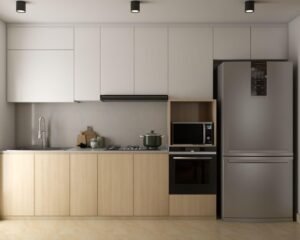
A straight stainless steel kitchen is an excellent option for homeowners who want a modern, functional, and space-efficient kitchen. Designed along a single wall, this kitchen layout makes effective use of available space while keeping essential cooking, preparation, washing, and storage areas within easy reach.
Straight kitchens are particularly suitable for compact apartments, studio homes, rental properties, independent houses, and selected villa projects. When combined with stainless steel cabinet carcasses, practical storage accessories, and carefully selected shutters, they can deliver a clean and contemporary appearance without requiring a complicated layout.
For homeowners considering a stainless steel modular kitchen, the choice of material is as important as the layout. SS304 stainless steel is commonly selected for its corrosion resistance in many indoor kitchen environments, while galvanized iron (GI) steel provides an alternative for projects where initial cost is a major consideration.
At Karvi Interio, we manufacture metal interior solutions, including SS304 stainless steel modular kitchens, GI modular kitchens, stainless steel cabinet carcasses, wardrobes, and customized metal furniture. This guide explains straight stainless steel kitchen designs, materials, cabinet construction, price considerations, advantages, maintenance, and the factors to evaluate before selecting a manufacturer.
Whether you are planning a new apartment kitchen or specifying cabinets for a residential development, this guide will help you make a more informed decision.
1. What Is a Straight Stainless Steel Kitchen?
A straight stainless steel kitchen is a kitchen in which the primary cabinets, countertop, and work areas are arranged along a single wall.
The layout is also known as a single-wall kitchen or a straight modular kitchen. It is a practical choice when the available room does not require or accommodate cabinets on multiple walls.
In a stainless steel version, the cabinet carcasses are fabricated from stainless steel, such as SS304, or another specified metal system. The kitchen can incorporate different shutter materials, drawer systems, countertops, and accessories according to the homeowner’s budget and design preferences.
A typical straight stainless steel kitchen may include:
- Stainless steel base cabinets.
- Wall-mounted storage cabinets.
- A sink cabinet with plumbing access.
- A hob cabinet and cooking area.
- Drawer units for cutlery and utensils.
- Bottle pull-outs and other organizers.
- A countertop made from granite, quartz, or another suitable material.
- Shutters in laminate, acrylic, PU finish, glass, or selected decorative finishes.
- Optional loft cabinets extending towards the ceiling.
- Dedicated spaces for a refrigerator, chimney, oven, or other appliances.
The exact configuration depends on the length of the wall, the location of windows and doors, the plumbing and electrical points, and the family’s cooking habits.
How Does a Straight Kitchen Work?
A well-planned straight kitchen arranges the refrigerator, sink, preparation surface, and cooking zone along one wall. The layout should minimize unnecessary movement and provide sufficient counter space between important work areas.
For example, a compact apartment kitchen might place the refrigerator at one end, the sink near the existing plumbing connection, a clear preparation surface in the middle, and the hob towards the other end.
This arrangement is only a starting point. The final sequence should account for appliance dimensions, ventilation, safety, plumbing, and the amount of counter space required.
2. Why Choose a Straight Kitchen Layout?
Straight kitchens are popular because they provide a straightforward arrangement of cabinets and appliances. They can be particularly effective in apartments where the kitchen shares space with a dining area or an open-plan living room.
Efficient Use of Wall Space
All primary cabinets are positioned along one wall, leaving the remaining floor area open. This can help smaller kitchens feel less crowded.
Simple Movement
When the layout is properly planned, the sink, preparation surface, cooking area, and refrigerator can be arranged for convenient everyday use.
Straightforward Cabinet Planning
A single-wall layout can simplify cabinet scheduling, measurement, and installation because it usually requires fewer corner units than L-shaped or U-shaped kitchens.
Contemporary Appearance
A continuous countertop and coordinated shutters can create a clean, modern appearance. Stainless steel carcasses can be paired with warm wood-look finishes, neutral colours, glass, or other suitable materials.
Flexible Budget Options
A straight kitchen can be specified with basic cabinets and practical shutters or upgraded with premium SS304 construction, advanced drawers, designer finishes, and specialized accessories.
The total investment depends on the cabinet quantity and specification rather than the layout alone.
3. Straight Stainless Steel Kitchen Designs
The best straight kitchen design depends on the available wall length, ceiling height, household requirements, and preferred interior style.
3.1 Minimalist Straight Stainless Steel Kitchen
A minimalist kitchen uses simple cabinet fronts, a restrained colour palette, and limited decorative details.
SS304 carcasses can be combined with plain laminate, acrylic, or other suitable shutters to create a streamlined appearance.
This design is useful for homeowners who prefer easy-to-coordinate finishes and a clutter-free countertop.
Recommended features:
- Straight base and wall cabinets.
- Simple shutter designs.
- Practical drawer storage.
- A durable countertop.
- Integrated or coordinated appliance spaces.
- Limited decorative accessories.
3.2 Straight SS304 Kitchen with Premium Shutters
A premium straight kitchen can combine SS304 cabinet carcasses with acrylic, PU-finished, glass, or other designer shutters.
This approach allows homeowners to select stainless steel for the cabinet structure while choosing a different surface appearance for the visible fronts.
For example, a neutral-coloured shutter can be paired with a contrasting countertop and understated handles or a suitable handleless profile.
The price depends on the selected shutter system, hardware, cabinet dimensions, and finish.
3.3 Straight Stainless Steel Kitchen with Wooden Finish
Homeowners who like the appearance of wood but want a metal cabinet structure can consider a straight kitchen with wood-look shutters.
The steel carcass provides the cabinet structure, while the shutters introduce a warmer visual character.
Suitable finishes may include wood-look laminates or other compatible decorative materials. The choice should consider cleaning requirements, heat exposure, moisture, and the manufacturer’s recommendations.
3.4 Compact Straight Kitchen for Apartments
Compact kitchens need careful storage planning because every cabinet has a limited amount of space.
A practical design may include deep drawers below the countertop, wall cabinets above the preparation area, and a narrow pull-out for bottles or frequently used items where space permits.
The design should preserve adequate working space and avoid overcrowding the wall with too many cabinets.
3.5 Straight Kitchen with Loft Cabinets
Loft cabinets can use the upper portion of the wall for items that are not required every day.
Before installing loft cabinets, check the ceiling height, access requirements, structural support, ventilation, and the amount of visual bulk they create.
Lofts should be designed for suitable storage loads and should remain accessible without unsafe climbing arrangements.
3.6 Straight Stainless Steel Kitchen with Glass Shutters
Glass shutters can introduce a lighter appearance into selected wall cabinets. Depending on the system, the glass may be used with an appropriate frame.
Glass requires careful selection, secure hardware, and installation according to the manufacturer’s recommendations. It is generally best used selectively rather than assuming every cabinet needs a glass front.
3.7 Straight Kitchen with a Stainless Steel Sink Cabinet
The sink cabinet is an important component because it houses plumbing connections and may be exposed to occasional splashes or leaks.
A stainless steel carcass can be a useful option in this area, provided the design allows adequate access to plumbing, proper drainage, and easy inspection.
Do not seal plumbing access behind permanent cabinet panels without an appropriate maintenance provision.
4. SS304 Stainless Steel Kitchen Cabinets
SS304 is a commonly used stainless steel grade for residential and commercial kitchen applications. Its composition provides good corrosion resistance in many ordinary indoor environments.
For a straight stainless steel modular kitchen, the cabinet carcass can be manufactured from SS304 sheet and combined with selected shutters, shelves, and hardware.
What Is an SS304 Carcass?
The carcass is the structural body of a cabinet. It includes the sides, bottom, top or supporting structure, shelves where applicable, and other components required by the cabinet design.
A complete modular kitchen can include several different carcass modules for drawers, sinks, cooking appliances, storage, and wall-mounted cabinets.
What Thickness Should Be Used?
The appropriate sheet thickness depends on the cabinet design, dimensions, reinforcement, loads, and fabrication method.
For example, a specification might call for a 1.0 mm carcass and 0.8 mm shutters. These are example specifications, not universal requirements for every kitchen.
Before ordering, ask the manufacturer to confirm:
- Stainless steel grade.
- Carcass sheet thickness.
- Shutter material and thickness.
- Shelf construction.
- Reinforcement and load requirements.
- Welding, bending, or fastening details.
- Surface finish and edge treatment.
Thickness alone does not establish cabinet quality. Good design, accurate fabrication, proper reinforcement, and correct installation are also important.
Is SS304 Corrosion-Proof?
SS304 is corrosion-resistant, but no ordinary stainless steel grade should be described as completely corrosion-proof under every condition.
Chloride exposure, unsuitable cleaning chemicals, contamination from carbon steel, and prolonged exposure to corrosive substances can cause staining or corrosion.
Appropriate material selection, fabrication, cleaning, and maintenance help preserve the cabinet system.
5. GI Steel vs SS304 for Straight Kitchens
A straight modular kitchen can also use GI steel cabinets. GI generally refers to galvanized steel protected by a zinc coating, often with an additional powder-coated finish in modular furniture applications.
The suitability of GI depends on coating quality, fabrication, edge protection, exposure conditions, and maintenance.
| Feature | SS304 straight kitchen | GI straight kitchen |
|---|---|---|
| Initial investment | Generally higher | Often more economical |
| Cabinet material | Stainless steel grade 304 | Galvanized steel |
| Common finish options | Stainless steel finishes and compatible shutters | Powder-coated finishes and compatible shutters |
| Termite resistance | Not susceptible to termite damage | Not susceptible to termite damage |
| Corrosion protection | Inherent corrosion resistance under suitable conditions | Depends substantially on coating integrity and protection |
| Maintenance | Clean and inspect surfaces and hardware | Inspect coating damage and exposed edges |
| Design flexibility | Broad range of cabinet and shutter combinations | Broad range of powder-coated and shutter combinations |
| Typical positioning | Mid-range to premium applications | Budget-conscious to mid-range applications |
Which Is Better for Your Home?
Choose SS304 when corrosion resistance, material specification, and a stainless steel cabinet structure are priorities.
Consider GI steel when initial cost is a major consideration and the manufacturer can provide a suitable coating system and clear material specifications.
In both cases, compare the complete quotation, including shutters, hardware, installation, and warranty.
6. Straight Stainless Steel Kitchen Price
The straight stainless steel kitchen price depends on the dimensions, cabinet count, material grade, sheet thickness, shutters, accessories, and installation scope.
For initial planning, the following are broad indicative estimates rather than verified live prices or a Karvi Interio quotation.
| Kitchen specification | Indicative planning price |
|---|---|
| Basic metal modular kitchen | ₹2,500–₹3,500 per billable sq. ft. |
| Standard SS304 modular kitchen | ₹3,500–₹5,000 per billable sq. ft. |
| Premium SS304 modular kitchen | ₹5,000–₹6,500 per billable sq. ft. |
| Luxury customized straight kitchen | ₹6,500–₹8,500+ per billable sq. ft. |
These ranges should not be applied directly to the kitchen’s floor area. Suppliers may calculate pricing by cabinet area, running feet, individual modules, or a project-level package.
A straight kitchen may be less complex to fabricate than a kitchen with multiple corners, but a premium straight kitchen can still cost more than a basic L-shaped kitchen if it uses more expensive finishes and hardware.
What Affects the Price?
The final price depends on:
- SS304 or GI cabinet specification.
- Sheet thickness and reinforcement.
- Number and size of cabinet modules.
- Shutter material and finish.
- Hinges, drawer runners, and organizers.
- Countertop material.
- Sink, faucet, chimney, hob, and appliance provisions.
- Transportation and installation.
- Site modifications.
- Taxes and other quotation exclusions.
Example Budget for a Straight Kitchen
Consider a hypothetical straight kitchen with the following costs:
| Component | Illustrative amount |
|---|---|
| Cabinet carcasses and shutters | ₹1,60,000 |
| Hardware and accessories | ₹30,000 |
| Countertop | ₹25,000 |
| Transportation and installation | ₹15,000 |
| Illustrative subtotal | ₹2,30,000 |
This is an example budget only. Taxes, appliances, plumbing, electrical changes, and other exclusions may increase the final project total.
The actual amount should be calculated from the cabinet schedule and the manufacturer’s written quotation.
7. Factors Affecting Straight Stainless Steel Kitchen Cost
7.1 Length of the Kitchen Wall
The total wall length influences how many base cabinets, wall cabinets, drawers, and countertop sections can be accommodated.
A longer kitchen may require more material, but the price does not always increase in direct proportion to wall length because cabinet types and hardware differ.
7.2 Number of Cabinets
A kitchen with multiple drawers, tall storage units, and specialized pull-outs may cost more than one with simple shelves and fewer modules.
Prepare a cabinet schedule before comparing quotations.
7.3 Shutter Material
Laminate, acrylic, PU finish, glass, and other options have different costs and appearance characteristics.
Choose a shutter material according to budget, cleaning requirements, design preference, and the manufacturer’s suitability recommendations.
7.4 Drawer and Hinge Quality
Drawer runners and hinges influence how cabinets operate in daily use.
Confirm the specified hardware brand, model, load capacity, soft-close mechanism, and warranty. Premium hardware can increase the initial cost but may be worthwhile for frequently used cabinets.
7.5 Countertop Selection
Granite, quartz, and other countertop materials vary in cost, appearance, maintenance, and installation requirements.
The quote should specify countertop material, thickness, edge profile, sink cut-out, hob cut-out, backsplash, and installation.
7.6 Appliances and Services
The refrigerator, hob, chimney, sink, faucet, oven, dishwasher, plumbing, and electrical work may be outside the cabinet quotation.
Confirm these items before deciding whether the proposed budget is sufficient.
8. Ideal Straight Kitchen Dimensions
There is no single ideal dimension for every straight kitchen. The layout should be based on actual site measurements, appliance requirements, and comfortable movement.
Countertop Height
A countertop height around 850–900 mm is a common starting point for residential planning, but the appropriate height depends on the users’ height, working preferences, appliance requirements, and design.
Countertop Depth
A depth of approximately 600 mm is common for many standard kitchen countertops. Actual dimensions may vary according to the cabinet system, wall conditions, and appliances.
Wall Cabinets
Wall cabinet depth and height should be selected to provide practical storage without obstructing the work area. The gap between the countertop and wall cabinets must account for the hob, chimney, and other equipment.
Refrigerator and Appliance Space
The kitchen plan should allow the refrigerator doors to open fully and provide the clearances specified by the appliance manufacturer.
Similarly, the hob, oven, chimney, and dishwasher require the dimensions and ventilation clearances specified for their models.
Important Measurement Checklist
Before manufacturing begins, confirm:
- Total usable wall length.
- Ceiling height and loft requirements.
- Door and window positions.
- Plumbing and drainage points.
- Electrical sockets and appliance connections.
- Refrigerator and appliance dimensions.
- Hob and chimney requirements.
- Countertop height and depth.
- Wall condition and floor level.
Accurate measurements reduce the likelihood of on-site changes and cabinet-fitting problems.
9. How to Plan a Straight Modular Kitchen
Step 1: Understand Your Cooking Habits
List the appliances, cookware, groceries, and utensils that need to be stored. A family that cooks frequently may need more drawer space and countertop area than a household that prepares fewer meals.
Step 2: Map the Existing Services
Locate the water supply, drainage, electrical outlets, chimney duct, and appliance connections. Moving these services may increase the cost and complexity of a renovation.
Step 3: Select the Cabinet Layout
Plan the refrigerator, sink, preparation area, hob, and storage zones along the available wall.
Allow adequate workspace and avoid placing appliances where their doors obstruct movement.
Step 4: Choose the Cabinet Material
Compare SS304 and GI based on budget, environment, finish, and intended usage.
Step 5: Finalize the Shutters
Select laminate, acrylic, PU finish, glass, or another suitable shutter material. Review samples under the lighting conditions of the actual kitchen.
Step 6: Plan Storage Accessories
Decide which cabinets need drawers, cutlery organizers, bottle pull-outs, tray storage, or other mechanisms.
Step 7: Confirm the Countertop
Select the countertop and confirm the sink, hob, edge treatment, and backsplash details.
Step 8: Approve the Drawings and Quotation
Before production, review the dimensions, cabinet schedule, material specifications, hardware, inclusions, exclusions, and installation responsibilities.
10. Cabinet Materials, Shutters and Finishes
The cabinet structure and the visible shutter finish serve different purposes. A stainless steel carcass can support several design directions.
Laminate Shutters
Laminate is a practical option for homeowners seeking a broad range of colours and textures.
It can provide a wood-look, solid-colour, or patterned appearance. Select a suitable product and edge treatment for kitchen use.
Acrylic Shutters
Acrylic shutters are often selected for a contemporary, smooth appearance. Glossy finishes can make a compact kitchen look brighter, although fingerprints and surface marks may be more noticeable on some finishes.
PU-Finished Shutters
PU finishes offer selected colour and appearance options. The final price depends on the substrate, coating system, surface preparation, and quality of application.
Glass Shutters
Glass shutters can introduce visual contrast into wall cabinets or selected display areas. The frame, hardware, glass specification, and installation must be appropriate for the application.
Wood-Look Finishes
Wood-look shutters can balance the metallic character of the cabinet structure with a warmer visual style.
Stainless Steel Finishes
Depending on the system, visible stainless steel components may use brushed or other appropriate finishes. The appearance should be coordinated with the countertop, sink, appliances, and surrounding interiors.
11. Storage Accessories for Straight Kitchens
Because a straight kitchen uses one primary wall, storage must be carefully allocated.
Deep Drawers
Deep drawers can store cookware, pots, pans, and other frequently used items. Confirm the load rating and runner system.
Cutlery Organizers
Drawer organizers help separate cutlery and small utensils. Select a size that fits the actual drawer dimensions.
Bottle Pull-Outs
Narrow pull-outs can use otherwise difficult-to-access spaces for bottles, condiments, or selected pantry items.
Tray and Plate Storage
Dedicated tray and plate storage can improve organization when the cabinet dimensions and hardware are suitable.
Sink Cabinet Storage
The sink cabinet should preserve access to pipes, valves, and potential leak points. Storage around the plumbing should not interfere with maintenance.
Wall Cabinets and Lofts
Wall cabinets store everyday items, while lofts can hold less frequently used goods. Place heavier items in accessible cabinets designed to support their loads.
Appliance Storage
Small-appliance cabinets may be useful, but ventilation, electrical access, and safe operating clearances must be considered.
The objective is not to install every available accessory. It is to select the accessories that solve actual storage problems.
12. Advantages of Straight Stainless Steel Kitchens
Space Efficiency
A single-wall layout keeps the other sides of the room open. This can benefit compact apartments and open-plan homes.
Simplified Planning
The layout can be easier to measure and coordinate because it usually has fewer corner cabinets and less complex countertop geometry.
Termite Resistance
Stainless steel is not susceptible to termite damage. This is an important consideration for homeowners comparing metal cabinet carcasses with wood-based structures.
Moisture Performance
Stainless steel does not absorb water like many wood-based cabinet materials. However, water leaks can still affect hardware, finishes, adjacent surfaces, and the building itself.
Easy Cleaning
Stainless steel surfaces can generally be cleaned using a soft cloth and a suitable mild detergent. Avoid abrasive materials and aggressive chemicals unless the manufacturer confirms their suitability.
Modern Appearance
Straight lines and continuous cabinet fronts can create a clean, contemporary interior. The look can be customized with different shutters, countertops, handles, and lighting.
Flexible Specification
The kitchen can be designed for different budgets by changing the cabinet specification, shutters, hardware, and accessory package.
Potential for Standardized Manufacturing
For suitable apartment and builder projects, repeating standardized cabinet modules can simplify procurement and installation planning.
13. Limitations and Considerations
A straight stainless steel kitchen is not the ideal solution for every home.
Limited Cabinet Wall Space
All primary storage is arranged along one wall. Larger households may need tall units, lofts, or additional storage elsewhere.
Less Countertop Area in Compact Kitchens
The sink, hob, and preparation area compete for space along the same run. The layout must preserve a sufficiently large work surface.
Visible Surface Marks
Depending on the finish, stainless steel may show fingerprints, scratches, or water marks. Appropriate cleaning and finish selection help manage these issues.
Initial Investment
An SS304 kitchen may have a higher initial cost than some basic wood-based or GI systems. Compare the complete specification rather than assuming every stainless steel kitchen costs the same.
Installation Accuracy
Cabinets need accurate measurements and suitable fixing methods. Wall irregularities, service locations, and incorrect appliance clearances can create installation problems.
Need for Careful Material Selection
SS304 is corrosion-resistant, but cleaning chemicals and chloride exposure can damage its surface. The kitchen should be maintained according to the manufacturer’s instructions.
Understanding these limitations before ordering makes it easier to decide whether a straight kitchen suits your needs.
14. Straight Stainless Steel Kitchen vs Wooden Kitchen
Both metal and wood-based modular kitchens can be suitable for residential interiors. Their performance depends on material quality, fabrication, installation, maintenance, and the surrounding environment.
| Comparison | Straight stainless steel kitchen | Straight wooden or plywood kitchen |
|---|---|---|
| Cabinet structure | Stainless steel or specified metal | Plywood or another engineered wood |
| Termite susceptibility | Stainless steel is not susceptible | Depends on the material and surrounding conditions |
| Moisture response | Steel itself does not swell like wood-based boards | Depends on board type, edge sealing, and exposure |
| Finish selection | Compatible shutters and metal finishes | Broad choice of laminates, veneers, and coatings |
| Cleaning | Generally straightforward | Depends on surface finish and material |
| Initial price | Depends on grade and specification | Depends on board grade and specification |
| Repair considerations | Surface, hardware, and fabrication repairs | Board, edge, finish, and hardware repairs |
| Design flexibility | Metal fabrication and shutter combinations | Carpentry and a broad range of finishes |
A homeowner should compare the expected performance, initial cost, serviceability, and maintenance requirements of the actual products being quoted.
A properly specified SS304 carcass can be an attractive option when resistance to termite damage and moisture-related deterioration of the cabinet structure are priorities.
15. Maintenance and Cleaning Guide
Correct maintenance helps preserve the appearance and performance of a stainless steel kitchen.
Daily Cleaning
Wipe food spills, grease, and water marks using a soft cloth and a suitable mild detergent. Rinse where necessary and dry the surface.
Avoid Harsh Chemicals
Avoid chlorine-based cleaners, bleach, and other aggressive chemicals unless specifically approved for the particular surface. Chlorides can damage stainless steel under certain conditions.
Prevent Cross-Contamination
Steel wool or tools previously used on carbon steel can leave iron particles on stainless steel. These particles may later rust and stain the surface.
Use suitable cleaning tools dedicated to stainless steel surfaces.
Inspect Hardware
Check hinges, drawer runners, handles, and pull-outs periodically. Replace damaged components and follow the hardware manufacturer’s adjustment and maintenance instructions.
Address Water Leaks Promptly
Inspect the sink cabinet and plumbing connections for leaks. Dry affected areas and arrange repairs where necessary.
Maintain the Countertop
Countertop materials have different cleaning and maintenance requirements. Follow the countertop manufacturer’s recommendations rather than applying stainless steel cleaning advice to every surface.
Review Warranty Conditions
Keep the purchase documents, material specifications, and warranty certificate. Follow the stated maintenance conditions to avoid disputes about coverage.
16. Straight Kitchens for Apartments, Villas and Builders
Straight stainless steel kitchens can be tailored to different property types.
Apartment Kitchens
Compact apartments may benefit from a straight layout because it preserves open floor space and simplifies cabinet planning.
A combination of base drawers, wall cabinets, and carefully chosen accessories can provide practical storage along one wall.
Rental Properties
Property owners may consider metal cabinet structures for selected rental projects where resistance to termite damage is an important factor.
The specification should balance the initial budget with serviceability, hardware quality, and the expected use of the property.
Independent Houses and Villas
A straight kitchen can suit smaller secondary kitchens, utility kitchens, or homes where the room layout favours a single cabinet run.
Larger villas may also use a straight layout in compact service areas while choosing a different arrangement for the main kitchen.
Builders and Developers
Builders can consider standardized straight kitchen modules for apartment projects where the kitchen dimensions and service points are repeated.
Before selecting a standard package, evaluate variations in floor plans, plumbing positions, appliance requirements, and finish specifications.
Architects and Interior Designers
Architects and designers should obtain clear cabinet drawings, material details, and hardware specifications before integrating the kitchen into the overall project.
Early coordination helps reduce clashes with electrical points, plumbing, ventilation, and countertop cut-outs.
17. How to Choose a Straight Stainless Steel Kitchen Manufacturer
Selecting the right manufacturer is essential for obtaining the expected material quality and installation outcome.
Verify the Steel Grade
Ask for the specified stainless steel grade and supporting documentation. Do not rely on the term “stainless steel” alone.
Confirm Sheet Thickness
The quotation should identify the thickness of the carcass, shutters, shelves, and other relevant components.
Review Cabinet Drawings
Request dimensioned drawings or a cabinet schedule showing the arrangement of base cabinets, wall cabinets, drawers, lofts, and appliances.
Check Fabrication Quality
Review bends, edges, welds, fastening systems, reinforcements, and surface finishing where applicable.
Compare Hardware
Confirm the brand, model, load capacity, and warranty of hinges, drawer runners, and pull-outs.
Obtain an Itemized Quotation
The quotation should distinguish the carcass, shutters, accessories, countertop, transportation, installation, taxes, and exclusions.
Understand the Warranty
Review which components are covered, the warranty duration, exclusions, and the process for reporting defects.
Confirm Installation Responsibilities
Determine who will handle site measurement, delivery, assembly, alignment, service coordination, and post-installation adjustments.
A manufacturer that provides clear specifications and a defined installation process makes it easier to evaluate quality and cost.
18. Why Consider Karvi Interio for a Straight Stainless Steel Kitchen?
Karvi Interio provides metal interior solutions for residential and selected commercial applications. The product range includes SS304 stainless steel modular kitchens, GI modular kitchens, metal cabinet carcasses, stainless steel wardrobes, and customized metal furniture.
For a straight stainless steel kitchen, homeowners can evaluate different cabinet configurations, shutters, finishes, and storage accessories according to the dimensions and budget of the project.
Solutions for Homeowners
Homeowners can discuss kitchen layouts, cabinet dimensions, material choices, countertop coordination, and storage requirements before finalizing a quotation.
Solutions for Architects and Designers
Architects and interior designers can discuss cabinet specifications, customized modules, finish combinations, and manufacturing requirements for individual residential projects.
Solutions for Builders and Developers
For suitable developments, standardized metal cabinet modules can be planned around the project layout and repeated specifications.
Start with Your Kitchen Requirements
To help prepare a relevant estimate, keep the following details ready:
- Kitchen wall dimensions or floor plan.
- Preferred straight kitchen layout.
- SS304 or GI cabinet preference.
- Shutter finish and colour.
- Countertop selection, if already decided.
- Required storage accessories.
- Appliance dimensions and service locations.
- Project location and approximate budget.
Explore Karvi Interio’s website at https://karviinterio.com/ for kitchen and metal interior solutions.
For related pricing information, read the Cost of Stainless Steel Modular Kitchen in Bangalore.
19. Frequently Asked Questions About Straight Stainless Steel Kitchens
1. What is a straight stainless steel kitchen?
A straight stainless steel kitchen is a single-wall kitchen layout in which the main cabinets and countertop are arranged along one wall. Its cabinet carcasses are manufactured from stainless steel and can be paired with different shutters and accessories.
2. Is a straight stainless steel kitchen suitable for small apartments?
Yes. A straight layout can be suitable for compact apartments because it keeps the other sides of the room open. Cabinet dimensions and appliance placement must be planned carefully to preserve adequate workspace.
3. What is the price of a straight stainless steel kitchen?
The indicative price can range from approximately ₹2,500 to ₹8,500 or more per billable sq. ft., depending on the material, construction, shutters, accessories, and installation scope. Request a project-specific quotation for an accurate estimate.
4. What is the price of a straight SS304 modular kitchen?
The price depends on the grade, sheet thickness, number of cabinets, hardware, shutter finish, and countertop. A standard-to-premium planning range may be around ₹3,500–₹6,500 per billable sq. ft., but actual quotations vary.
5. Which is better: SS304 or GI for a straight kitchen?
SS304 generally provides better corrosion resistance in many kitchen environments. GI can be more economical when its protective coating is appropriate and maintained. The choice depends on budget, exposure, and required performance.
6. Can a straight stainless steel kitchen have wooden-finish shutters?
Yes. A stainless steel carcass can be combined with suitable wood-look shutters, including compatible laminate options. This provides a warmer appearance while retaining a metal cabinet structure.
7. Can I install a loft in a straight stainless steel kitchen?
Yes. Loft cabinets can use the upper wall space for less frequently used items. Their design should account for ceiling height, support, accessibility, and suitable storage loads.
8. Which countertop is suitable for a straight stainless steel kitchen?
Granite and quartz are common choices, although other materials may also be suitable. The final choice depends on budget, appearance, maintenance, fabrication requirements, and compatibility with the sink and hob.
9. Are stainless steel kitchens termite-resistant?
Stainless steel itself is not susceptible to termite damage. However, other components used in the kitchen, such as wood-based shutters or adjoining furniture, may have different characteristics.
10. Can stainless steel kitchens rust?
Yes, staining or corrosion can occur under unsuitable conditions. Chlorides, harsh cleaning products, contamination from carbon steel, and poor maintenance can affect stainless steel.
11. What sheet thickness should I choose?
The appropriate thickness depends on the cabinet design, reinforcement, loads, and fabrication method. Ask the manufacturer to specify the thickness of each relevant component rather than choosing based on thickness alone.
12. Are kitchen accessories included in the price?
Not always. Pull-outs, tandem drawers, organizers, hinges, and other hardware may be included or quoted separately. Ask for a written list of included components.
13. Is a straight kitchen cheaper than an L-shaped kitchen?
It can be, because a straight kitchen usually requires fewer corner mechanisms and simpler countertop geometry. However, material selection, cabinet quantity, and accessories can make a straight kitchen more expensive than a basic L-shaped design.
14. Can a straight stainless steel kitchen be customized?
Yes. The layout, cabinet dimensions, shutters, finishes, hardware, and accessories can be selected according to the site and the manufacturer’s capabilities.
15. How do I maintain stainless steel kitchen cabinets?
Clean them with a soft cloth and suitable mild detergent, avoid aggressive chlorine-based chemicals, remove spills promptly, and inspect hardware periodically. Follow the manufacturer’s maintenance instructions.
16. Can I replace my existing wooden kitchen with a straight stainless steel kitchen?
Yes. A replacement kitchen can be planned after measuring the existing space and reviewing plumbing, electrical points, appliance dimensions, and wall conditions.
17. Is a straight stainless steel kitchen suitable for rental apartments?
It can be suitable for selected rental projects, particularly when resistance to termite damage is important. The final choice should consider the initial cost, expected use, hardware quality, and maintenance.
18. What should I check in a stainless steel kitchen quotation?
Check the steel grade, sheet thickness, cabinet dimensions, shutter material, hardware, accessories, countertop, installation, taxes, exclusions, and warranty conditions.
19. Can architects and builders order straight stainless steel kitchens for multiple apartments?
Yes, subject to the manufacturer’s production capabilities and the project’s requirements. Standardized cabinet schedules can simplify procurement when apartment layouts and service points are sufficiently consistent.
20. How can I get a straight stainless steel kitchen estimate from Karvi Interio?
Prepare the kitchen dimensions or floor plan, material preference, shutter selection, storage requirements, appliance details, budget, and project location. These details help establish the project scope for a quotation.
Conclusion: Plan Your Straight Stainless Steel Kitchen with Karvi Interio
A straight stainless steel kitchen can be a practical solution for homeowners seeking a modern single-wall layout, efficient use of space, and a durable metal cabinet structure.
The right design depends on accurate measurements, appropriate material selection, well-planned storage, suitable shutters, reliable hardware, and correct installation.
SS304 can be a good choice when corrosion resistance is a priority, while GI steel may provide a more economical alternative for suitable applications. The final decision should be based on the complete specification rather than the material name or price alone.
For homeowners, architects, interior designers, and builders, a detailed cabinet schedule and itemized quotation are the best starting points.
Explore straight stainless steel kitchen solutions with Karvi Interio. Visit https://karviinterio.com/ to learn more about stainless steel modular kitchens, metal cabinet systems, and customized interior solutions.
Ready to explore a Basic Range of Wood, an Affordable range of galvanized steel and Premium stainless steel kitchen cabinets in Bangalore, kitchen interior & wardrobe solutions for your space? with different combination shutters complete home interiors in steel with Stainless Steel PVD Furniture Contact Karvi Interio today for personalized consultations and expert design services. Visit our website to discover the efficiency and durability of stainless steel wardrobes tailored to your needs. Construction for interior products Gauge, visit our YouTube channel for information videos, Before visiting the showroom some of the steps to follow, Looking for Collaboration with US, About warranty & guarantee, Transform your storage spaces with Karvi Interio’s expertise!