
Thickness Matters in Stainless Steel Cabinets
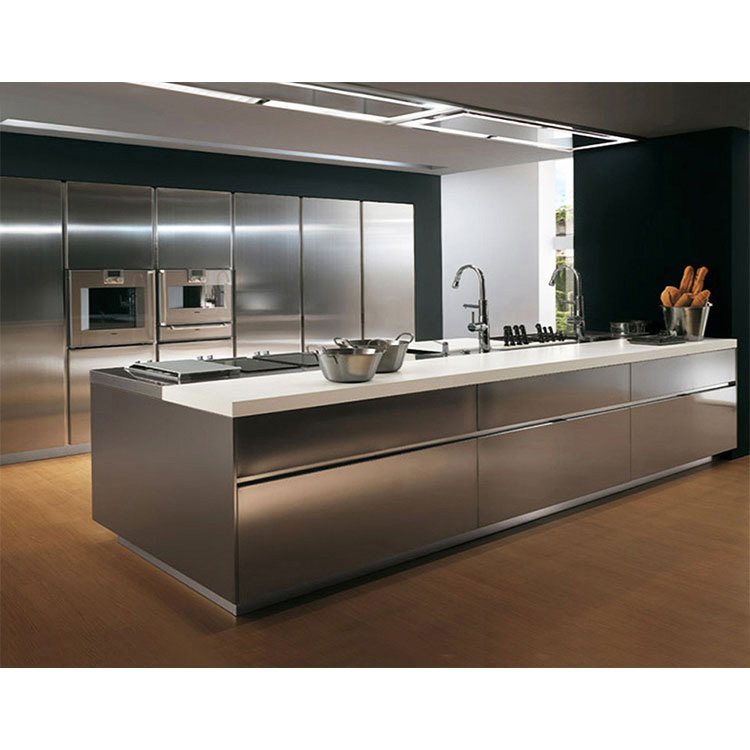
If you are comparing 18 gauge vs 20 gauge stainless steel cabinets, the difference directly affects:
-
Strength
-
Durability
-
Load-bearing capacity
-
Long-term performance
-
Price
At Karvi Interio, we frequently educate customers about why thickness matters in stainless steel cabinet for kitchen, especially for Indian cooking environments.
Thickness Matters in Stainless Steel Cabinets
Understanding Stainless Steel Gauge
In stainless steel fabrication, gauge number indicates thickness. The lower the gauge number, the thicker the steel.
-
18 Gauge Stainless Steel ≈ 1.2 mm thick
-
20 Gauge Stainless Steel ≈ 1 mm thick
- 22 Gauge Stainless Steel ≈ 0.8 mm thick
Although the difference appears small (0.3 mm), structurally it is significant.
Thicker steel offers:
-
Higher rigidity
-
Better dent resistance
-
Improved load capacity
-
Reduced vibration
Why Thickness Matters in Stainless Steel Cabinets
Kitchen cabinets are not decorative shells. They hold:
-
Granite or quartz countertops
-
Built-in hobs
-
Chimneys
-
Heavy utensils
-
Water purifiers
-
Pull-out baskets
Thin steel can flex under load over time. Proper gauge selection ensures structural integrity for 15–25 years.
18 Gauge Stainless Steel Cabinets – Features & Benefits
1. Superior Structural Strength
18 gauge stainless steel is approximately 30% thicker than 20 gauge. It provides excellent rigidity for base cabinets and tall units.
2. Ideal for Base Cabinets
Base cabinets support countertops and appliances. 18 gauge is recommended for:
-
Sink units
-
Hob units
-
Tall pantry units
-
Island cabinets
3. Better Dent Resistance
Thicker steel resists dents from impact, making it suitable for high-use family kitchens.
4. Long-Term Durability
In premium projects, 20 gauge ensures long lifecycle performance with minimal deformation.
5. Suitable for Welded Carcass Systems
Karvi Interio’s welded stainless steel carcass systems perform best with 20 gauge construction for structural stability.
20 Gauge Stainless Steel Cabinets – Features & Applications

1. Lightweight Construction
20 gauge stainless steel is thinner and lighter. It reduces overall project weight.
2. Cost-Effective Option
Since material usage is lower, 20 gauge cabinets are more economical.
3. Suitable for Wall Cabinets
Wall-mounted cabinets carry less weight. 20 gauge is often sufficient for:
-
Overhead cabinets
-
Light storage units
-
Decorative units
4. Budget-Conscious Projects
For projects where budget control is important, 20 gauge can be strategically used in non-load-bearing sections.
18 Gauge vs 20 Gauge Stainless Steel Cabinets – Direct Comparison
| Feature | 18 Gauge Stainless Steel Cabinets | 20 Gauge Stainless Steel Cabinets |
|---|---|---|
| Thickness | ~1.2 mm | ~1 mm |
| Strength | High | Moderate |
| Dent Resistance | Excellent | Good |
| Load Capacity | Heavy-duty | Medium |
| Cost | Higher | Lower |
| Ideal For | Base & Tall Units | Wall Cabinets |
Which Gauge is Better for Indian Homes?
Indian kitchens involve:
-
Heavy granite countertops
-
Large utensil storage
-
Wet zones near sink
-
High daily usage
-
Multi-generational cooking
For these conditions:
-
20 gauge stainless steel cabinets are ideal for base structures OR carcass.
-
20 gauge stainless steel cabinets are acceptable for overhead units.
- 20 gauge stainless steel cabinets are acceptable for shutters or doors.
A hybrid approach is often the most practical solution.
Does Thickness Affect Rust Resistance?
No. Rust resistance depends on:
-
Stainless steel grade (SS 304 vs SS 202)
-
Surface finishing
-
Fabrication quality
Thickness impacts strength — not corrosion resistance.
Karvi Interio uses SS 304 food-grade stainless steel for kitchen cabinets, ensuring corrosion resistance regardless of gauge.
Common Myths About Gauge Selection
Myth 1: Thicker Steel Is Always Necessary
Not always. Using 18 gauge everywhere increases cost unnecessarily. Proper engineering ensures optimized thickness usage.
Myth 2: 20 Gauge Is Weak
20 gauge is structurally sound for wall cabinets. Problems arise only when used in heavy base units.
Myth 3: Thickness Difference Is Negligible
A 0.3 mm difference significantly impacts rigidity over long spans.
Performance in Wet Areas
Under-sink cabinets are exposed to:
-
Plumbing leaks
-
RO water drips
-
Cleaning chemicals
-
High humidity
18 gauge is recommended for:
-
Sink base cabinet
-
Dishwasher units
-
Utility cabinets
It provides better structural reliability over time.
Sound & Vibration Considerations
Thicker steel reduces:
-
Panel vibration
-
Operational noise
-
Flex during drawer movement
- Karvi Interio has engineered a cabinet structure incorporating PU foam or corrugated honeycomb core material to minimize sound and vibration.
In premium kitchens, 18 gauge enhances solidity and perceived quality.
Cost Impact of 18 vs 20 Gauge
Material cost increases proportionally with thickness.
However, consider:
-
Lifecycle durability
-
Reduced maintenance
-
No swelling
-
No termite damage
-
Structural stability
Choosing proper thickness is an investment decision, not just a pricing factor.
What Do Commercial Kitchens Use?
Commercial kitchens typically use thicker gauges due to heavy usage.
For residential modular kitchens, professional fabrication allows optimized use of both gauges based on load zones.
Recommended Configuration for Residential Stainless Steel Kitchen
Best Practice Layout:
-
Base Cabinets: 20 Gauge
-
Sink Unit: 20 Gauge
-
Tall Units: 20 Gauge
-
Wall Cabinets: 20 Gauge
-
Drawer Panels: 20 Gauge
- Shutters : 22 Gauge
This ensures structural integrity without unnecessary cost escalation.
Why Fabrication Quality Matters More Than Gauge Alone
Even thick steel fails if:
-
Improper welding is done
-
Panels are loosely assembled
-
Structural reinforcement is missing
Karvi Interio focuses on:
-
Welded carcass systems
-
Precision bending
-
Reinforced corners
-
Quality hardware integration
Gauge selection is one component of total engineering.
Long-Term ROI of Choosing Correct Thickness
When properly designed:
-
Cabinets last 20+ years
-
No swelling
-
No termite issues
-
Minimal structural maintenance
-
High resale value
Stainless steel kitchens built with correct gauge selection outperform traditional wooden kitchens in lifecycle value.
Frequently Asked Questions
1. Is 18 gauge stainless steel overkill for home kitchens?
Not for base cabinets. It provides stability and long-term strength.
2. Can I choose 20 gauge to reduce cost?
Yes, but limit it to wall cabinets and non-load areas Depends on design of carcass.
3. Does thicker steel look different?
Visually no. The difference is structural, not aesthetic.
4. Is gauge more important than stainless steel grade?
Both matter. Grade determines corrosion resistance; gauge determines strength.
Final Verdict: Thickness Truly Matters
When comparing 18 gauge vs 20 gauge stainless steel cabinets, the right choice depends on application.
-
For structural strength and heavy-duty performance → 18 gauge
-
For lightweight upper storage → 20 gauge
The smartest approach is engineered optimization — not random selection.
If you are planning a stainless steel modular kitchen in Bangalore, Chennai, or Hyderabad, consult experts who understand structural fabrication. At Karvi Interio, we design stainless steel kitchens with correct gauge allocation to ensure durability, hygiene, and long-term value.
Ready to explore a Basic Range of Wood, an Affordable range of galvanized steel and Premium stainless steel kitchen cabinets in Bangalore, kitchen interior & wardrobe solutions for your space? with different combination shutters complete home interiors in steel with Stainless Steel PVD Furniture Contact Karvi Interio today for personalized consultations and expert design services. Visit our website to discover the efficiency and durability of stainless steel wardrobes tailored to your needs. Construction for interior products Gauge, visit our YouTube channel for information videos, Before visiting the showroom some of the steps to follow, Looking for Collaboration with US, About warranty & guarantee, Transform your storage spaces with Karvi Interio’s expertise!