
What Is 304 Food-Grade in Stainless Steel Modular Kitchens
But what exactly does this mean?
Why is SS 304 considered superior?
And how does it impact durability, hygiene, and long-term value?
This detailed guide explains everything homeowners, architects, and builders need to know about 304 food-grade stainless steel modular kitchens, especially in Indian climatic conditions.
What Is 304 Food-Grade in Stainless Steel Modular Kitchens?
Understanding Stainless Steel Grades
Stainless steel is not a single material. It is an alloy made primarily of:
-
Iron
-
Chromium
-
Nickel
-
Carbon
-
Manganese
The proportion of these elements determines the grade of stainless steel. Common grades used in kitchens include:
-
SS 202
-
SS 304
-
SS 316
Among these, SS 304 is the most widely recommended for residential modular kitchens.
What Is 304 Food-Grade Stainless Steel?
304 food-grade stainless steel is an austenitic stainless steel containing:
-
~18% Chromium
-
~8% Nickel
This is why it is also called 18/8 stainless steel.
The presence of chromium forms a protective oxide layer that prevents rust and corrosion. Nickel enhances structural strength and resistance to acidic and saline environments.
Because of its non-reactive nature, SS 304 is extensively used in:
-
Commercial kitchen equipment
-
Food processing plants
-
Hospitals
-
Pharmaceutical units
-
Premium residential modular kitchens
When used in stainless steel modular kitchens, it ensures safety, hygiene, and long-term durability.
Why Is SS 304 Called “Food-Grade”?
The term “food-grade” means the material:
-
Does not react with food
-
Does not leach harmful chemicals
-
Is resistant to corrosion from salt, turmeric, oil, vinegar, and spices
-
Is easy to clean and sanitize
In Indian kitchens, exposure to moisture, masalas, steam, and oil is constant. Lower-grade steel or plywood can deteriorate under such conditions.
304 food-grade stainless steel modular kitchens are designed to handle exactly this environment.
Composition Breakdown of SS 304
| Element | Percentage | Function |
|---|---|---|
| Chromium | ~18% | Corrosion resistance |
| Nickel | ~8% | Strength & oxidation resistance |
| Carbon | ≤ 0.08% | Improves hardness |
| Iron | Balance | Base metal |
The chromium oxide layer formed on the surface is self-healing. If scratched, it reforms automatically in the presence of oxygen.
This makes SS 304 ideal for:
-
Kitchen carcasses
-
Shutters
-
Drawer systems
-
Tall pantry units
-
Sink cabinets
304 vs 202 Stainless Steel – What’s the Difference?
Many manufacturers offer cheaper stainless steel kitchens using SS 202, but there are major differences.
SS 202:
-
Lower nickel content
-
More manganese
-
Prone to corrosion in humid areas
-
Less expensive
SS 304:
-
Higher corrosion resistance
-
More durable
-
Better finish retention
-
Long-term value
In coastal cities like Mumbai, Chennai, Kochi, and high-humidity cities like Bangalore, SS 304 modular kitchens significantly outperform SS 202.
Where Is SS 304 Used in Modular Kitchens?
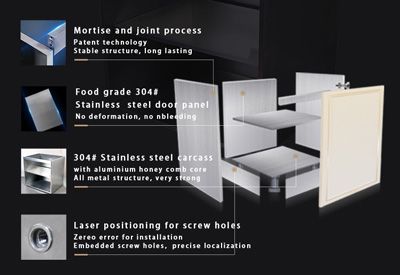
1. Carcass Structure
The internal skeleton of cabinets is made entirely from SS 304 sheets.
2. Shutters
Can be:
-
Plain stainless steel
-
Powder-coated
-
Glass-finished
-
PU-coated
-
Acrylic laminated
3. Drawer Channels
High-load stainless steel drawer systems ensure smooth functioning.
4. Sink Cabinets
Moisture-prone zones benefit most from SS 304 construction.
Advantages of 304 Food-Grade Stainless Steel Modular Kitchens
1. 100% Waterproof
Unlike plywood, stainless steel does not swell or delaminate.
2. Termite-Proof
No wood means no termite damage.
3. Fire Resistant
Steel does not burn, adding safety.
4. High Load Bearing Capacity
SS 304 cabinets can handle heavy utensils and appliances.
5. Long Lifespan
A well-fabricated SS 304 kitchen can last 20–30 years.
6. Hygienic Surface
Non-porous material prevents bacterial growth.
Is SS 304 Magnetic?
SS 304 is generally non-magnetic in its annealed state. However, slight magnetism can occur after fabrication processes like bending or welding. This does not indicate poor quality.
Homeowners should focus on:
-
Material test certificate (MTC)
-
Thickness (18–20 gauge preferred)
-
Authentic supplier verification
Thickness Matters: Gauge Selection
For premium stainless steel modular kitchens:
-
Carcass: 0.8 mm to 1.0 mm
-
Shutters: 0.8 mm preferred
-
Reinforcement areas: Higher thickness
Thinner sheets compromise durability and structural rigidity.
Finish Options for SS 304 Kitchens

-
Brushed matte finish
-
Hairline finish
-
Powder-coated colors
-
Glass shutter combinations
-
PU metallic coatings
This makes stainless steel modular kitchens suitable for:
-
Modern apartments
-
Luxury villas
-
High-end penthouses
Cost Factor of SS 304 Modular Kitchens
While SS 304 kitchens are costlier than plywood kitchens initially, they offer:
-
Zero maintenance
-
No replacement cost
-
Higher resale value
-
Long-term ROI
In premium markets like Bangalore and Mumbai, homeowners increasingly prefer SS 304 modular kitchen for long-term investment.
Maintenance of 304 Stainless Steel Kitchens
Maintenance is simple:
-
Wipe with mild detergent
-
Avoid strong acids
-
Use microfiber cloth
-
No polishing required
Unlike wood kitchens that require repainting or laminate replacement, SS 304 maintains its appearance for years.
Common Myths About SS 304 Kitchens
Myth 1: Stainless Steel Looks Industrial
Modern finishes eliminate this concern.
Myth 2: It Rusts
True SS 304 does not rust under normal residential conditions.
Myth 3: It Is Too Expensive
Over 20 years, it is often more economical than wood kitchens.
Why Premium Brands Prefer SS 304
High-end modular kitchen manufacturers use SS 304 because:
-
It meets global hygiene standards
-
It withstands Indian cooking styles
-
It enhances brand credibility
-
It aligns with luxury positioning
Builders of premium apartments and villas now specify 304 food-grade stainless steel modular kitchens as a USP.
Ideal Applications in Indian Homes
-
Coastal homes
-
High-humidity regions
-
Large joint-family kitchens
-
Rental luxury properties
-
Homes with heavy daily cooking
Environmental Benefits
Stainless steel is:
-
100% recyclable
-
Sustainable
-
Low VOC
-
Eco-friendly compared to plywood
Choosing SS 304 contributes to greener construction practices.
Final Thoughts
Understanding what 304 food-grade stainless steel means in modular kitchens is critical before making an investment.
SS 304 offers:
-
Superior corrosion resistance
-
Long-term structural integrity
-
Hygiene compliance
-
Premium aesthetics
-
Exceptional durability
For homeowners planning a high-end kitchen that lasts decades without maintenance headaches, 304 food-grade stainless steel modular kitchens are a technically superior solution.
Ready to explore a Basic Range of Wood, an Affordable range of galvanized steel and Premium stainless steel kitchen cabinets in Bangalore, kitchen interior & wardrobe solutions for your space? with different combination shutters complete home interiors in steel with Stainless Steel PVD Furniture Contact Karvi Interio today for personalized consultations and expert design services. Visit our website to discover the efficiency and durability of stainless steel wardrobes tailored to your needs. Construction for interior products Gauge, visit our YouTube channel for information videos, Before visiting the showroom some of the steps to follow, Looking for Collaboration with US, About warranty & guarantee, Transform your storage spaces with Karvi Interio’s expertise!